
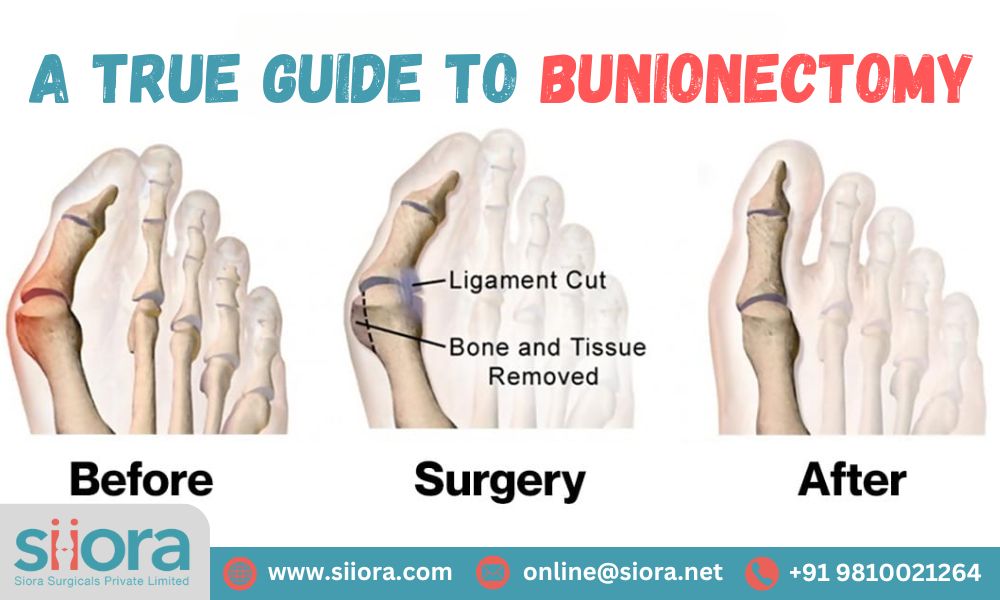
The field of orthopedics has evolved a lot in the last 2-3 decades, and more reliable surgical procedures have been carried out by surgeons to treat both simple and complicated orthopedic conditions. This has helped people experience better surgical outcomes. One of the surgical procedures that we are going to talk about in this post is “Bunionectomy,” a surgical technique that is used to treat bunions. Before we move ahead to the procedure, let us have a brief look at what a bunion is.
What is a Bunion?
A bunion is a bony bump that generally forms at the big toe, especially at the base. The first metatarsal is involved in this condition. The big toe can be seen pointing towards the second toe excessively when this condition occurs. Bunions are painful, especially when they rub against the shoes.
A bunion is a result of enlargement of the bone or tissue at the base of the big toe or sometimes the little toe. When it occurs on the little toe, the condition is known as Tailor’s Bunion. Severe cases of this condition may require surgery, and it might involve the use of Orthopaedic Implants.
What is Bunionectomy?
Bunionectomy is a surgical procedure that is aimed at relieving pain & inflammation caused by a bunion. Plus, the surgery is also performed to correct the deformity caused due to the enlargement of the bone or tissue. In simple terms, we could also say it is a “bunion surgery.” The surgical procedure is also known as Hallux Valgus correction.
Bunionectomy becomes necessary when all other treatment procedures like home remedies, analgesics, NSAIDs, and even corticosteroid injections fail to provide any relief from the symptoms.
What Are the Types of Bunionectomy?
Bunion surgery can be performed in two ways:
- Open-foot bunionectomy
- Minimally invasive bunionectomy
Open-Foot Bunionectomy
This is a traditional form of surgery in which the surgeon requires to make a large incision of about 5-6 inches. This will expose the entire joint and the surgeon will be able to clearly see the reason behind the bony bump. Here, the problematic tissue and/or the enlarged bone is cut by the surgeon, and the bones that make up the big toe are realigned using metal orthopedic implants like plates, screws, & wires. The incision is then closed with stitches.
Minimally Invasive Bunionectomy
Minimally invasive surgery is often considered a better option than open-foot surgery. This is because it requires 2-3 small incisions of around ¼ inches to access the site that needs to be operated. Minimally invasive surgery is performed under local anesthesia, and the surgeon uses specialized instruments and implants to remove the tissue or extra bone causing the bump and realign the big toe bones in their correct anatomy. The entire procedure is known to take around 2 hours which is significantly less than traditional surgery. Plus, this procedure is also less painful and ensures a quicker recovery.
To get international standard quality orthopedic devices required for the surgical treatment of bunions and other orthopedic conditions, contact Siora Surgicals Pvt. Ltd. Based in India, Siora is a trustworthy orthopaedic device manufacturer with a huge inventory of products in different categories & sizes. The company is also looking to become one of the reliable orthopedic device manufacturers in USA.
 Siora Surgicals Pvt. Ltd
Leave a comment