
Orthopedic screws are often used to fix broken bones, stabilize joints, or secure implants. They play a vital role in the healing process, holding things together until the body is strong enough to do it on its own. But what happens after the bone heals? Do the screws stay in forever? Or do they need to come out?
Why Screws Are Left in or Taken Out?
In many cases, orthopedic screws are designed to stay in permanently. If they’re not causing pain, discomfort, or complications, doctors often leave them alone. After all, they’re doing no harm, and taking them out would mean another surgery.
However, there are situations where screw removal becomes necessary:
- Persistent pain or discomfort: Some patients feel constant irritation around the screw site. This is especially common if the screw is near the skin or in a high-motion area like the ankle, knee, or wrist.
- Screw migration or loosening: If a screw starts to shift from its original position, it can cause pain, affect movement, or damage surrounding tissue.
- Infection: In rare cases, screws can become infected. When antibiotics aren’t enough, removal may be the only way to stop the spread.
- Allergic reaction or rejection: Although extremely rare, some patients may react to the metal used in screws (like nickel or titanium).
- Children and growing bones: Kids who’ve had screws implanted may need them removed later to avoid interference with bone growth.
- Athletes or physically active individuals: Screws that don’t bother the average person might cause real problems for someone who runs, jumps, or lifts regularly.
The Removal Process: What to Expect?
Screw removal is usually much simpler than the original surgery. Still, it’s not something to take lightly—it’s a surgical procedure that comes with its own set of risks and recovery steps.
Here’s how the process typically works:
- Pre-surgery evaluation: Imaging tests like X-rays or CT scans help the surgeon locate the screws and plan the best approach. If the screws are buried deep, more detailed imaging may be needed.
- Anesthesia: The type depends on the location of the screws and your overall health. For some, local anesthesia is enough; others may need general anesthesia.
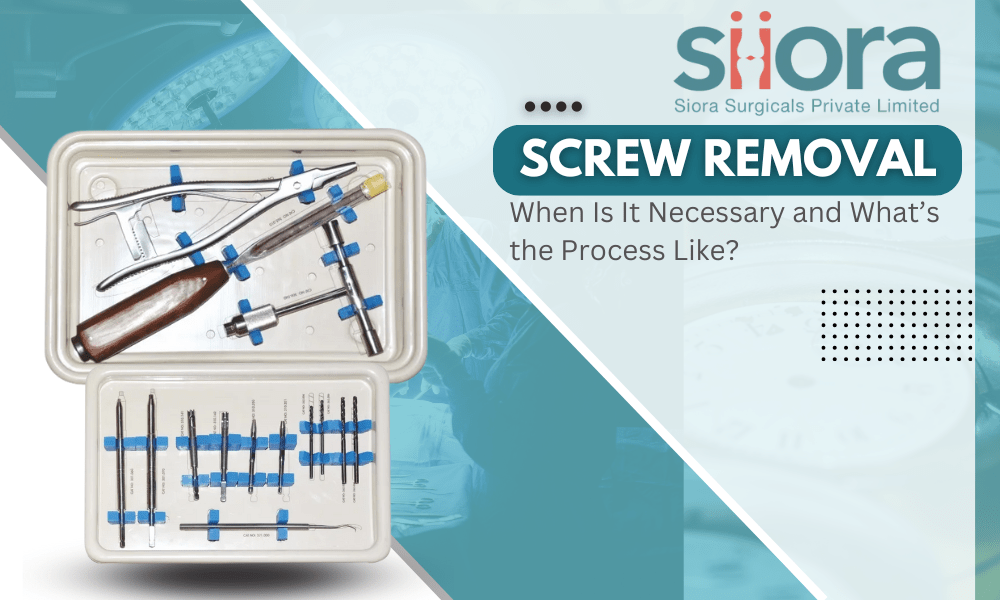
- Surgical removal: The surgeon reopens the original incision or makes a new one near the screw site. Special tools are required to remove the screw carefully after unscrewing it. If the screws have been in place for years, they may be harder to remove due to bone overgrowth.
- Recovery: Recovery time varies, but it’s usually faster than after the original procedure. Most patients can go home the same day and resume light activity within a few days. Full recovery might take a few weeks, depending on the site and complexity of the surgery.
- Risks: As with any surgery, there’s a chance of infection, bleeding, or nerve damage. However, complications are relatively rare when the procedure is done by an experienced surgeon.
Living Without the Screws
After removal, many people notice an immediate reduction in pain or improved range of motion—especially if the screws had been irritating nearby tissues. In some cases, physical therapy may be recommended to regain full strength and mobility.
If the screws were holding a previously fractured bone, the surgeon will make sure enough healing has taken place before removing them. Taking screws out too early can risk re-injury.
One Last Word
Orthopedic screw removal isn’t routine, but it’s not uncommon either. If you’re feeling discomfort long after a fracture has healed, it’s worth talking to your orthopedic surgeon. They’ll evaluate whether removal makes sense for you.
Sometimes, especially in surgeries involving cannulated screws, the decision to remove hardware depends on the location, the patient’s activity level, and long-term comfort, not just whether the bone has healed.


 Siora Surgicals Pvt. Ltd