
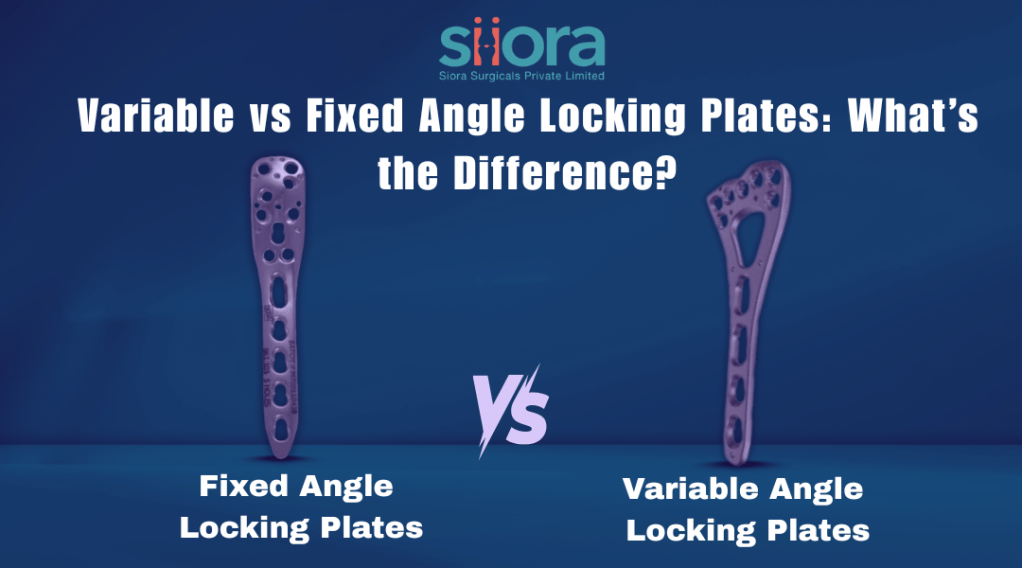
In the world of orthopedic surgery, locking plate systems have transformed how fractures are treated, especially complex or osteoporotic ones. Among these systems, variable angle locking plate and fixed angle locking plate are the two most widely used. While both are designed to provide enhanced stability and promote bone healing, they have some crucial differences. Whether you’re a surgeon, medical student, or simply someone curious about orthopedic implants, understanding how these two plate systems differ can shed light on the evolving techniques in trauma care.
What Are Locking Plates?
Before diving into their differences, it’s important to grasp what locking plates do. Locking plates are a type of internal fixation device used to hold fractured bones in the correct position during healing. Unlike traditional plates, which depend on friction between the plate and bone, locking plates have screws that lock into the plate itself. This creates a fixed-angle construct, improving stability and reducing the risk of screw loosening, especially helpful in patients with weak bone quality.
Fixed Angle Locking Plates: Reliable and Time-Tested
Fixed angle locking plates were the first to be introduced in the category of locking systems. In this design, the holes in the plate are threaded in a specific direction. When the screw is inserted, it follows a predetermined trajectory and locks into the plate at a fixed angle. This allows for excellent angular stability.
Advantages of Fixed Angle Plates:
- High mechanical stability, especially in metaphyseal and osteoporotic bone.
- Ideal for standardized fracture patterns where predictable screw positioning is possible.
- Lower cost compared to variable angle systems.
Disadvantages of Fixed Angle Plates:
- Limited flexibility in screw direction if anatomy or fracture line doesn’t match the screw trajectory, achieving optimal fixation becomes tricky.
- Not always ideal for fractures with complex geometry.
Variable Angle Locking Plates: Precision with Flexibility
Variable angle locking plates, as the name suggests, allow the surgeon to insert screws within a defined angular range, typically 15°–30° off-axis in any direction, while still achieving a locked construct. This design offers much more freedom when targeting small fracture fragments or working around anatomical structures like nerves or vessels.
Advantages of Variable Angle Plates:
- Greater intraoperative flexibility: Surgeons can target specific bone fragments or avoid areas of poor bone quality.
- Better suited for anatomically challenging or multi-fragmentary fractures.
- Often used in areas like the distal radius, proximal humerus, or periarticular regions where variable anatomy demands customized screw trajectories.
Limitations of Variable Angle Plates:
- Slightly lower mechanical stability compared to fixed angle constructs (though modern systems are closing this gap).
- Typically more expensive due to the advanced engineering required.
- Requires precise technique to maintain the locking mechanism within permitted angulation.
Which One Should Be Used?
The choice between fixed and variable angle locking plates often depends on the type of fracture, location, and surgeon preference. For example, in straightforward fractures with predictable anatomy, fixed angle plates offer reliable outcomes at a lower cost. However, for comminuted, intra-articular, or osteoporotic fractures where screw trajectory flexibility is key, variable angle plates can provide better fixation and reduce the risk of complications.
Surgeons also consider other factors such as bone quality, soft tissue condition, and implant availability. Many modern locking systems now offer a hybrid approach, combining fixed and variable angle screw options in one plate, giving surgeons the best of both worlds.
Final Thoughts
Both fixed and variable angle locking plates play a vital role in fracture fixation. While fixed angle plates offer mechanical robustness, variable angle plates provide surgical adaptability. As implant technology continues to evolve, we will see innovations that blur the line between fixed and variable designs, allowing for even more tailored and patient-specific solutions. For patients, this means safer surgeries, faster recovery, and better long-term outcomes. And for surgeons, it means more control over the trauma implant, more precision, and ultimately, better care.
 Siora Surgicals Pvt. Ltd
Leave a comment