
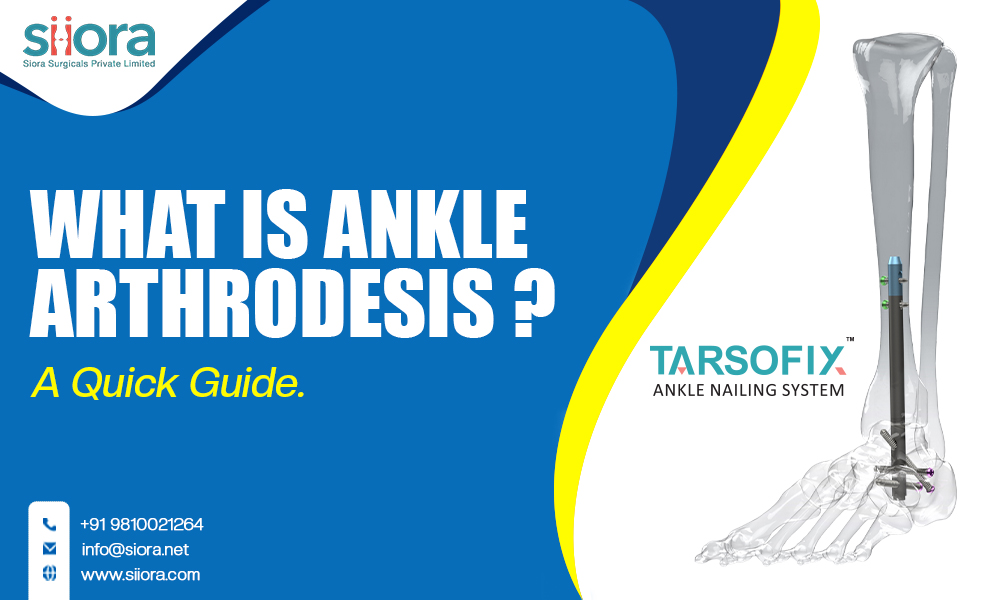
If you’ve been dealing with stubborn ankle pain for years, you’ve probably come across different treatment names—braces, injections, therapy, and sometimes even surgical options like an ankle nail or fusion procedures. One term that often comes up in serious cases is ankle arthrodesis. It sounds technical, but the concept is practical: when the ankle joint becomes too damaged to move without pain, the bones are fused so they function as one solid, stable structure.
Why Would Someone Need This Surgery?
Most people don’t suddenly jump to fusion. It usually becomes an option after the joint has been giving trouble for a long time. Old injuries, repeated sprains, advanced arthritis, or deformities slowly wear down the cartilage until every step feels sharp or stiff. Some patients feel grinding. Others notice swelling that just doesn’t go away.
Doctors often try everything else first—physiotherapy, medicines, customized footwear, injections. These can help for a while, but once the ankle loses its smooth surfaces and stability, there’s only so much temporary treatments can do.
That’s when fusion starts making sense—not as an aggressive option, but as a realistic way to bring daily movement back to a tolerable level.
How Does the Procedure Work?
Think of it this way: if the painful motion is removed, the pain disappears with it.
During arthrodesis, the surgeon clears the worn-out cartilage from the ends of the ankle bones. Once the surfaces are clean and prepared, the bones are aligned in a functional position and fixed together using screws, plates, or specialized implants. Over time, these bones grow into one solid block.
It’s not instant. The body takes weeks—or months—to complete the fusion, but once it happens, the previously painful joint no longer moves, which means the grinding pain stops.
Will Walking Feel Different?
Yes, in the sense that the ankle will lose some motion. But surprisingly, many people walk better after fusion than before. When a joint is unstable or constantly swollen, it throws off your entire gait. After arthrodesis, the ankle becomes firm and predictable. People often rediscover the comfort of standing for longer periods, climbing gentle slopes, or walking without thinking about every step.
You don’t lose your ability to walk. You lose painful movement—and most patients are more than happy to trade that.
Who Usually Benefits From Ankle Arthrodesis?
This procedure can be a good fit for people who:
- Have arthritis that has severely damaged the ankle
- Struggle with instability from old fractures
- Have deformities affecting their walk
- Feel constant pain despite non-surgical treatments
- Cannot rely on the ankle for daily activities
It’s also often chosen by patients who want a long-lasting, low-maintenance solution compared to artificial joint replacements.
Recovery: What to Expect
Recovery demands patience. Most people spend a few weeks without putting weight on the ankle so the bones can start fusing properly. After that, weight-bearing increases slowly with guidance from the surgeon or physiotherapist.
You’ll probably notice small improvements first—less swelling, a more confident step, and less fear of the ankle buckling. With time, these improvements add up to a predictable, stable gait.
In Simple Words
Ankle arthrodesis is not about giving up mobility. It’s about removing the painful, unreliable motion that’s been limiting your life. For many, it becomes the turning point that allows them to return to simple routines—walking comfortably, standing without fear, and getting back to an active life that felt out of reach.Learn about the advanced implants to treat orthopedic injuries at booth N37.A71 at WHX Dubai 2026.
 Siora Surgicals Pvt. Ltd
Leave a comment