
Fixing a badly broken shoulder has always been a tough job. The ball-and-socket joint is a marvel of mobility, but that also makes it a surgical nightmare when it shatters. For years, surgeons relied on a basic toolkit of plates and simple nails. But we are now in the era of smart implants. The future of shoulder fracture fixation is being driven by next-generation humeral intramedullary nails that are more anatomical, more stable, and more intelligent than ever before.
The Old Way Was a Compromise
Traditional shoulder fixation often forced a tough choice. Plates required large incisions, stripping muscle and vital blood supply from the bone. Early-generation nails were often bulky, had limited screw options, and their entry point could damage the critical rotator cuff tendons. The results were decent, but patients often faced long recoveries, stiffness, and sometimes, implant failure. The future is all about avoiding these compromises.
Next-Gen Design: Smarter, Not Just Stronger
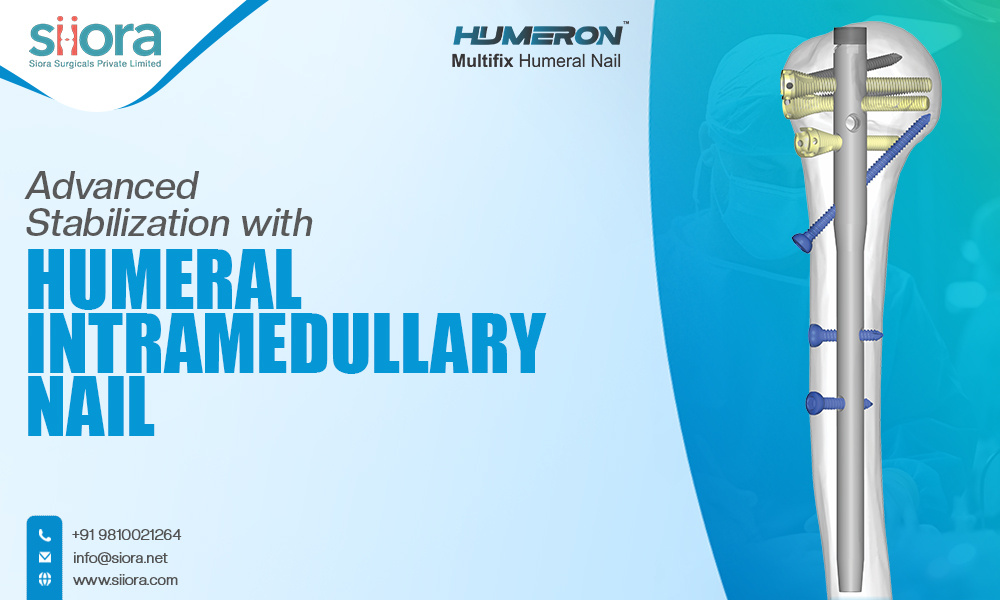
The new wave of advanced humeral nails, like the Multifix Humeral Nail, is defined by key innovations that directly address the flaws of older systems.
Anatomical-Driven Design
Instead of a one-size-fits-all approach, next-gen nails are designed using massive databases of CT scans to perfectly match the natural bow and shape of the human humerus. A straighter nail with a more central entry point preserves the rotator cuff attachment, while the overall shape reduces stress on the bone.
Multi-Planar Locking
The real magic is in the screw holes. These nails are bristling with locking options. Instead of just a few simple screws, they offer multiple holes at various angles—up, down, forward, and back. This allows a surgeon to create a 3D web of fixation, grabbing even the smallest bone fragments and locking them into a stable construct. This is especially critical in the soft, weak bone of an elderly patient.
Controlled Compression
A major leap forward is the ability to apply active intraoperative compression. With some new systems, the surgeon can precisely squeeze the fracture ends together by turning a dial on the insertion device. This is a massive improvement over the old-school “backslapping” technique and creates the tight, stable environment that bones love for healing.
The Rise of the “Smart Nail”
We are on the cusp of an even more exciting future: the intelligent implant. Imagine a humeral nail embedded with micro-sensors that can provide real-time feedback on the healing process.
Healing Hotspots
These sensors could tell the surgeon how much load the fracture is experiencing during physical therapy. Is the patient pushing it too hard? Not hard enough? The data could allow for a truly personalized rehab protocol.
Early Warning System
A smart nail could detect tiny micromotions that might indicate a problem, alerting the doctor to a potential non-union long before it shows up on an X-ray.
Materials and Coatings That Heal
The future isn’t just about design; it’s also about the surface of the implant itself. Researchers are working on bioactive coatings that can be applied to the nail. These coatings could be impregnated with substances that actively stimulate bone growth or release low doses of antibiotics to prevent infection—the number one enemy of any orthopedic implant. The nail would no longer be just a passive scaffold but an active participant in the healing process.
The Bottom Line
The future of shoulder fracture fixation is smarter, less invasive, and more personalized. Next-generation trauma implants like humeral nails are already delivering on this promise with designs that provide superior stability and are kinder to the body. As technology continues to advance with smart sensors and bioactive materials, the goal is clear: to create a fix that not only stabilizes the bone but actively accelerates its healing, getting you back to your life faster and more reliably than ever before.


 Siora Surgicals Pvt. Ltd