
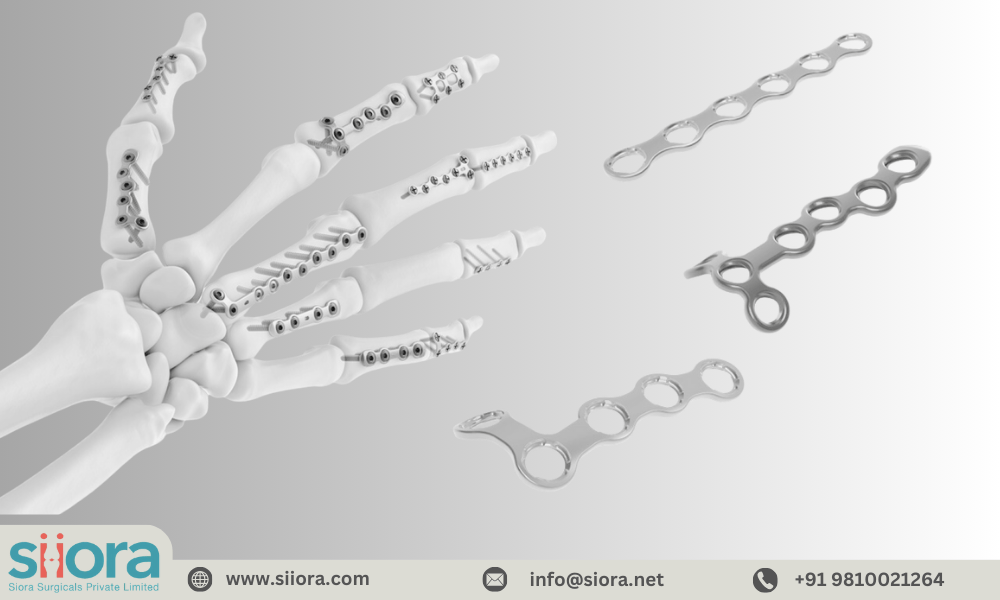
Hand fractures can significantly impact daily activities, requiring a precise and reliable method to restore function and facilitate recovery. Among various surgical interventions, the use of 2.0 mm locking plates has gained prominence for their effectiveness in stabilizing fractures and promoting healing. This blog delves into how these plates support post-surgical recovery in hand fractures, outlining their advantages and role in modern orthopedic practice.
Understanding Hand Fractures and Their Challenges
The human hand comprises 27 bones, making it highly susceptible to fractures due to falls, sports injuries, or accidents. Hand fractures can vary in severity, involving metacarpal or phalangeal bones, and may be accompanied by soft tissue damage.
The intricate anatomy of the hand presents unique challenges for surgical treatment. Precise alignment and stabilization are essential to restore the hand’s mobility, strength, and dexterity. Additionally, the small size of hand bones and the need to minimize soft tissue disruption make traditional fixation methods less ideal. This is where 2.0 mm locking plates come into play.
What Are 2.0 mm Locking Plates?
Locking plates are specialized implants designed to provide rigid fixation for fractured bones. The “2.0 mm” designation refers to the size of the screws and plates, making them particularly suitable for small bones like those in the hand. Unlike conventional plates, locking plates use screws that “lock” into the plate, creating a stable construct without relying solely on bone compression.
Benefits of the Unique Design of Locking Plates
Angular Stability
The locking mechanism ensures that screws do not shift, maintaining alignment even under stress.
Minimized Bone Damage
The plates distribute force more evenly, reducing the risk of stress-related bone damage.
Enhanced Fixation in Osteoporotic Bone
Locking plates are especially effective in weaker bone tissue, as they do not rely entirely on screw threads for stability.
Benefits of 2.0 mm Locking Plates in Post-Surgical Recovery
Optimal Stability
Locking plates offer superior stability compared to traditional fixation methods. The rigid construct reduces micromovements at the fracture site, which is crucial for proper healing. By maintaining alignment, these plates help restore the natural anatomy of the hand.
Accelerated Healing
The stability provided by locking plates minimizes complications such as malunion or delayed union. This promotes faster bone healing and reduces the need for prolonged immobilization, enabling patients to resume their daily activities sooner.
Preservation of Soft Tissue
The small size and precise design of 2.0 mm locking plates allow surgeons to minimize soft tissue disruption during surgery. This is particularly important in the hand, where preserving tendon and ligament integrity is critical for post-operative function.
Versatility in Complex Fractures
Locking plates can be adapted to treat a variety of fracture patterns, including comminuted and intra-articular fractures. Their design allows for secure fixation even in anatomically challenging regions, ensuring comprehensive treatment.
Reduced Risk of Hardware Complications
The locking mechanism of these plates reduces the risk of screw loosening or plate failure, common issues with traditional fixation methods. This enhances long-term outcomes and reduces the likelihood of secondary surgeries.
Post-Surgical Recovery Process with Locking Plates
Recovery after hand fracture surgery typically involves three phases:
Immediate Post-Operative Care
Patients are advised to keep their hands elevated to reduce swelling and may require a splint or cast for additional support. Locking plates reduce the need for prolonged immobilization, as their stability allows for earlier mobilization.
Rehabilitation
Physical therapy begins once the fracture shows signs of healing. Patients work on improving range of motion, strength, and grip, essential for restoring hand functionality. The stability of 2.0 mm locking plates ensures that therapy can be initiated sooner and with reduced risk.
Long-Term Recovery
Most patients achieve significant improvement within a few months. The low profile of the plates minimizes irritation, allowing for seamless recovery without compromising soft tissue healing.
Conclusion
2.0 mm locking plates have revolutionized the surgical management of hand fractures, offering unmatched stability, versatility, and minimal soft tissue disruption. These plates not only facilitate faster recovery but also improve long-term outcomes, enabling patients to regain full hand function.
Their design represents a blend of innovation and precision, making them an indispensable tool in orthopedic surgery. For individuals recovering from hand fractures, the use of locking plates provides a reliable pathway to healing and a swift return to an active lifestyle.
To explore the latest healthcare technology and orthopedic implants, register for Arab Health 2025 in Dubai.


 Siora Surgicals Pvt. Ltd