
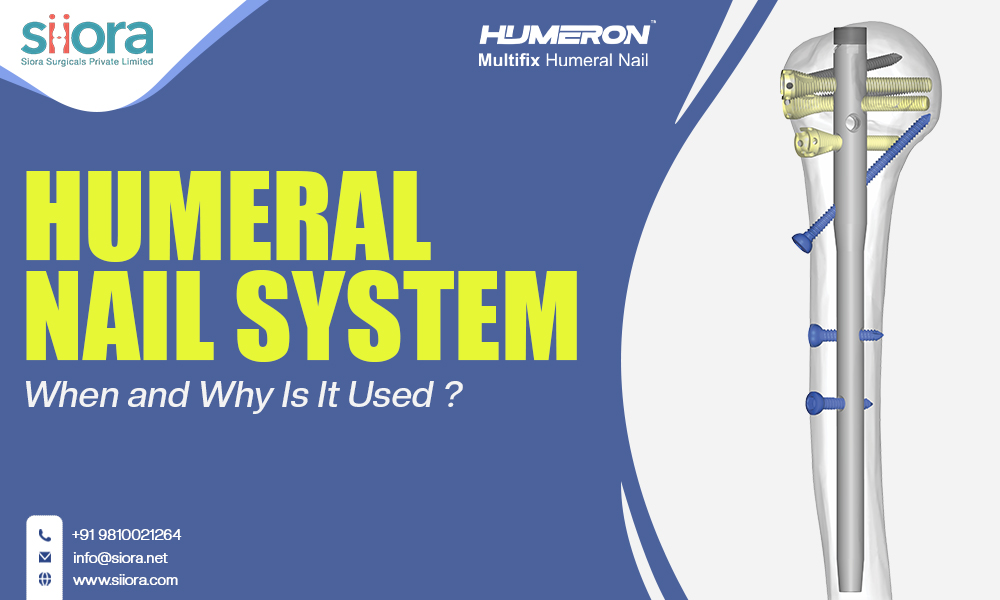
A fracture in the humerus can bring everyday life to a halt quicker than most people expect. This bone plays a part in almost every movement of the arm—lifting a cup, reaching for something on a shelf, or even turning over while sleeping. When it breaks, surgeons have a few treatment options to choose from, and one that’s gained steady trust over the years is the Humeral Nail System. It’s not used for every fracture, but when the situation calls for strong internal support with minimal tissue damage, this system often stands out.
When Do Surgeons Choose a Humeral Nail?
Not all humerus fractures need a nail; some heal well with bracing or plates. But certain cases really benefit from the stability nails provide.
Humeral Shaft Fractures
These are the classic candidates. When the long middle portion of the bone breaks, the nail offers a reliable internal “beam” that keeps things aligned while still allowing some gentle movement early on.
Multi-fragmented or Irregular Breaks
If the bone has shattered into several pieces—or the fracture line isn’t clean—plates sometimes struggle to offer uniform stability. A nail, sitting inside the canal, spreads the load evenly, which helps in more complicated patterns.
Situations Where Early Movement Matters
Some patients simply can’t afford a long downtime—manual workers, athletes, or anyone who relies heavily on arm strength. The humeral nail tends to support controlled mobility sooner than more invasive fixation methods.
Cases With Soft-Tissue Concerns
If the skin around the fracture is already compromised, or if the surgeon wants to avoid exposing the fracture site too much, the nail is a gentler option. The small entry point means less disruption to surrounding tissues.
Why Is the Humeral Nail System So Widely Trusted?
Most surgeons will tell you that it’s the blend of stability and practicality that makes this system appealing.
Strong Fixation With a Natural Advantage
The humerus has a central canal that naturally supports an implant running through it. Because of this built-in architecture, the nail works with the bone rather than against it, offering stability even during rehab.
Less Trauma Around the Fracture
With plates, there’s usually a need to expose the entire fracture. Nails don’t demand that level of exposure. By keeping soft-tissue damage low, the body gets better conditions for healing.
A Smoother Path Back to Motion
Patients often feel more confident when their arm can move a little earlier. Since the nail holds the bone securely from inside, gentle exercises don’t feel as risky.
A Good Choice for Weaker or Osteoporotic Bone
Elderly patients or those with reduced bone density often have trouble retaining screws used in plating. The nail’s internal position gives it an advantage in these situations, as it doesn’t rely solely on the outer bone layer for support.
How Does it Work During Surgery?
From the outside, the procedure looks straightforward, even if it requires precise skill. A small opening near the shoulder or the elbow gives access to the canal. The surgeon guides the nail down the center of the bone, then locks it in place with screws at the top and bottom. This prevents rotation and ensures the fragments stay aligned as healing progresses.
Patients usually start with light pendulum exercises or other gentle movements soon after surgery, and over time, the bone regains strength around the implant.
A Dependable Solution for Upper-Arm Injuries
While no treatment fits every patient perfectly, the Humeral Nail System continues to prove its value in real-world cases. It offers stability without excessive disruption, lets patients return to movement earlier, and works especially well in complex fractures that need reliable internal support.
As designs keep improving, surgeons are getting even better trauma implants for managing humeral injuries—but the goal remains simple: restore arm function as smoothly and safely as possible.


 Siora Surgicals Pvt. Ltd