
If you’ve ever heard someone mention a “metal plate” or “surgical screw” after a bone injury, chances are they were talking about orthopedic implants. While the term might sound complex or even intimidating, the concept is fairly straightforward. Orthopedic implants are medical devices used by surgeons to support or replace bones, joints, or cartilage that have been damaged due to injury, disease, or wear and tear. Let’s break down what these implants are, how they work, and why they matter.
Understanding the Basics
Orthopedic implants come into play when the natural healing process of the body needs some extra help. For instance, if you break a bone and it’s a simple fracture, a cast might be enough to let it heal. But if the fracture is severe, unstable, or involves a joint, surgeons may use an implant to keep the bones properly aligned while they heal. This ensures the injured area regains its strength and function.
Common Types of Orthopedic Implants
There are many types of orthopedic implants, and each serves a specific purpose:
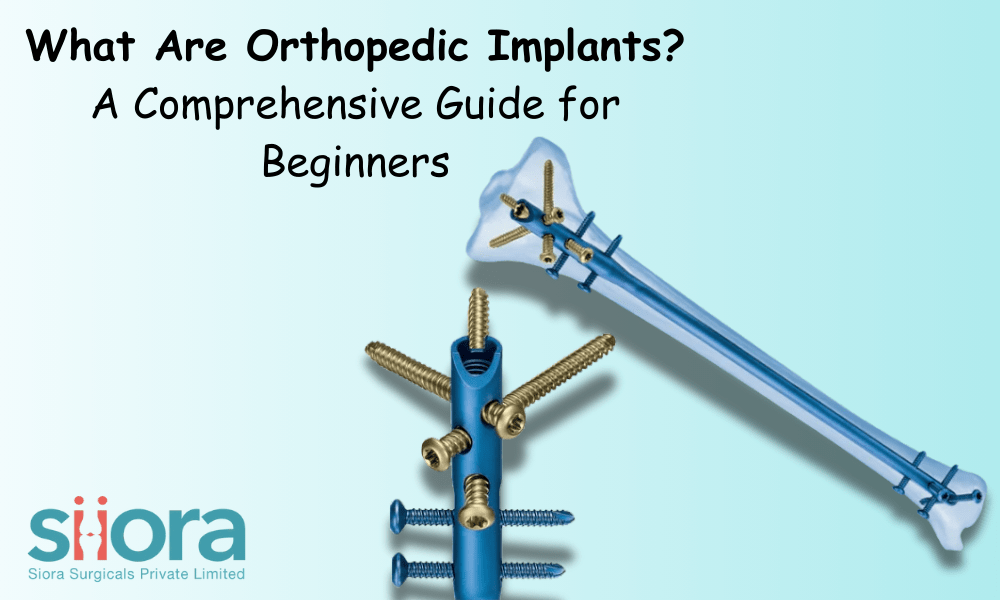
- Plates and Screws: These are perhaps the most commonly recognized. Plates are flat pieces of metal that are attached to the bone with screws. They hold broken bone fragments together, allowing them to heal in the right position.
- Rods and Nails: These are long, slender devices inserted into the center of long bones (like the femur or tibia). They stabilize fractures from the inside.
- Pins and Wires: Often used for smaller bones or in pediatric cases, these provide temporary support until the bone heals.
- Joint Replacements: These are more complex implants, like artificial hips or knees, designed to replace damaged joints entirely, restoring mobility and reducing pain.
What Are They Made Of?
Orthopedic implants must be both strong and biocompatible, meaning they shouldn’t harm the body or trigger an immune response. The most common materials include:
- Titanium and its alloys: Lightweight, strong, and highly resistant to corrosion, titanium is widely used in modern implants.
- Stainless steel: Durable and cost-effective, though less commonly used in permanent implants today.
- Cobalt-chromium alloys: Known for their wear resistance, these are often used in joint replacements.
- Polymers and ceramics: Used in specific parts of joint replacements, especially where smooth movement is essential.
The Surgical Process
The decision to use an orthopedic implant is made after thorough diagnosis and imaging, such as X-rays or MRIs. The surgery itself is typically performed under general or regional anesthesia. Depending on the type of injury or condition, the procedure can range from a relatively simple operation (like inserting a few screws) to a major one (like a total hip replacement).
Risks and Recovery
As with any medical procedure, there are risks associated with orthopedic implants. These can include infection, allergic reactions, implant loosening or breaking, and in rare cases, rejection. However, advances in surgical techniques and implant technology have significantly reduced these risks.
Recovery times and how fast orthopedic implants work vary widely based on the type of implant and the individual’s health and age. Physical therapy is often a key part of the recovery process, helping patients regain strength, flexibility, and mobility.
The Bigger Picture
Orthopedic implants have transformed the landscape of trauma and orthopedic care. Thanks to these devices, millions of people worldwide have regained the ability to walk, work, and live pain-free after serious injuries or debilitating joint conditions.
In simple terms, orthopedic implants act as scaffolding that supports your body while it heals or functions as a permanent replacement when healing isn’t possible. Whether it’s a tiny pin holding a finger bone together or a sophisticated artificial knee, these implants are marvels of medical engineering that quietly perform life-changing work.
Explore cutting-edge orthopedic solutions and other medical products at the FIME Miami 2025, where medical innovation is at its peak.


 Siora Surgicals Pvt. Ltd