
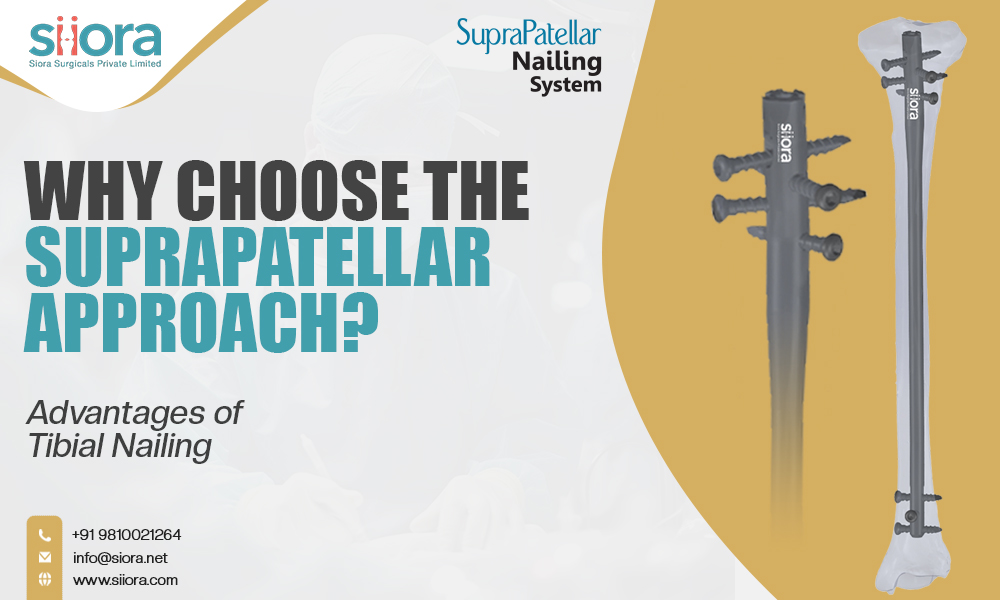
So you’ve had a nasty break in your shin bone (tibia). The plan is surgery, where the surgeon will place a metal rod down the center of the bone to hold it together. It’s a tried-and-true procedure. But in surgery, the how is just as important as the what. For years, the standard “how” for tibial nailing often came with an unwelcome side effect: chronic knee pain. Today, surgeons have a better option, a smarter way to do the surgery called the suprapatellar nail approach. It’s not just a minor tweak; it offers some massive advantages that are making it the new go-to technique.
Advantages of the Suprapatellar Approach
Advantage #1: It Spares Your Knee
Let’s cut to the chase. The single biggest reason to choose the suprapatellar approach is to avoid that nagging, persistent pain at the front of your knee. With the traditional (infrapatellar) technique, the surgeon’s entry point was just below your kneecap. They had to fight their way through or around your patellar tendon, a huge and vital piece of tissue. To get the right angle, your knee had to be bent sharply, putting even more stress on the whole area. The result? Even after your bone was perfectly healed, the traumatized tendon was often left angry, scarred, and painful. You couldn’t kneel without wincing.
The suprapatellar approach completely sidesteps this problem. By making the incision above the kneecap, the surgeon creates a safe path that goes behind the patella, leaving your patellar tendon totally untouched. It’s a simple, elegant detour that avoids causing unnecessary damage. Less trauma to your soft tissue means a much lower chance of that chronic knee pain that has affected patients for decades.
Advantage #2: A Straighter, More Accurate Fix
A surgeon’s worst nightmare is a “malunion”—a bone that heals, but heals crooked. Even a small rotation or angulation can throw off your entire gait and lead to long-term problems in your ankle, hip, and back. Getting the alignment perfect is Job One. But with the old technique, where the knee was bent like a pretzel, it was shockingly difficult for the surgeon to get a clear X-ray of the entire leg. They were trying to assess the straightness of a bent limb, which is a recipe for small errors.
The suprapatellar approach makes this a non-issue. Because the entry is from above, your leg can lie almost completely straight on the operating table. This gives the surgeon a crystal-clear, unobstructed X-ray view from your hip all the way down to your ankle. There’s no guesswork. They can see the alignment in real-time and make millimeter-perfect adjustments. A better view for the surgeon directly translates to a better, straighter outcome for you.
Advantage #3: An Easier Path to Recovery
Because the suprapatellar approach is less disruptive to the soft tissues around your knee, the recovery can be smoother. Less trauma often means less initial swelling and pain around the joint itself. Many patients find that their knee range of motion comes back more quickly and easily. Being able to bend your knee comfortably is a huge step in physical therapy. Getting a head start on your rehab means you’re on the fast track to walking normally, rebuilding your strength, and getting back to your life sooner.
The Bottom Line: It’s Just a Smarter Way
The choice is becoming clearer every day. The suprapatellar approach isn’t just a different way to do the same surgery; it’s a better way. It leads to less pain for the patient, provides a more accurate result for the surgeon, and can pave the way for a smoother recovery. It’s a true win-win, which is why surgeons and hospitals all over the world are making the switch. They aren’t just choosing a different technique; they are choosing a better outcome.
Siora Surgicals Pvt. Ltd. is a renowned manufacturer and supplier of an international standard range of trauma implants, including the Suprapatellar Nailing System. The company is also going to exhibit its advanced orthopedic devices at Arab Health 2026 – booth HN7.A71.


 Siora Surgicals Pvt. Ltd