
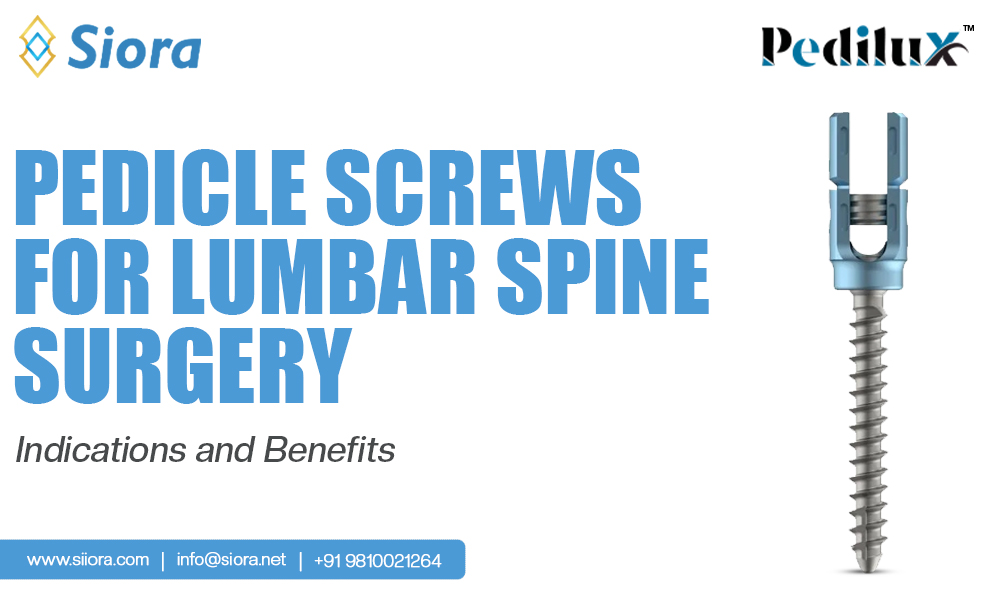
Lumbar spine problems can affect daily life in many ways. Patients often experience lower back pain, leg weakness, numbness, or difficulty walking. In cases where conservative treatment does not provide relief, surgery may become necessary. One of the most commonly used fixation devices in modern spine surgery is the pedicle screw system.
Pedicle screws help stabilize the spine after surgical procedures and support proper healing. Over the years, they have become an important part of lumbar spine surgery because of their strength, reliability, and ability to improve spinal stability.
What Are Pedicle Screws?
Pedicle screws are specialized implants used to fix spinal segments together. These screws are inserted into the pedicles of the vertebrae and connected with rods to create a stable construct. The system helps hold the spine in the correct position while fusion takes place.
The design of pedicle screws allows surgeons to achieve strong fixation in both the front and back portions of the vertebra. This makes them highly effective for stabilizing the lumbar spine.
Common Indications for Pedicle Screw Fixation
Degenerative Disc Disease
Degenerative changes in the lumbar spine may lead to instability and chronic back pain. In selected patients, pedicle screw fixation can provide support during spinal fusion and help maintain alignment.
Spondylolisthesis
Spondylolisthesis occurs when one vertebra slips over another. This condition can cause nerve compression and severe discomfort. Pedicle screws help restore spinal stability and reduce abnormal movement between vertebrae.
Spinal Trauma
Lumbar fractures caused by accidents or falls may compromise spinal stability. In such situations, pedicle screw systems are often used to stabilize the injured area and support recovery.
Spinal Deformities
Conditions such as scoliosis or kyphosis may require surgical correction. Pedicle screws allow controlled alignment of the spine and help maintain correction after surgery.
Spinal Tumors and Infections
In some cases, tumors or infections weaken the vertebrae. Pedicle screw fixation can provide structural support after decompression or removal of diseased tissue.
Benefits of Pedicle Screws in Lumbar Surgery
Strong Spinal Stabilization
One of the biggest advantages of pedicle screws is the stability they provide. The fixation system limits unwanted spinal movement and creates a supportive environment for fusion.
Improved Fusion Success
Stable fixation increases the chances of successful bone fusion. When spinal segments remain properly aligned, the healing process becomes more predictable.
Better Correction of Alignment
Pedicle screw systems help surgeons restore spinal alignment during surgery. This is especially useful in deformity correction and unstable spinal conditions.
Early Patient Mobilization
Because the fixation is strong, many patients can begin movement and rehabilitation earlier after surgery. Early mobilization may reduce complications associated with prolonged bed rest.
Versatility in Different Conditions
Pedicle screws can be used in a wide range of lumbar spine disorders. Their adaptability makes them suitable for both simple and complex procedures.
Important Surgical Considerations
Accurate placement of pedicle screws is essential. Improper positioning may affect nearby nerves or reduce fixation strength. Modern imaging systems and navigation techniques have improved the precision of screw placement and increased surgical safety.
The quality of bone also plays an important role. In osteoporotic patients, surgeons may use special techniques or enhanced screw designs for better fixation.
Conclusion
Pedicle screws have become a key component in lumbar spine surgery. They provide reliable stabilization, improve spinal alignment, and support successful fusion in many spinal conditions. Whether treating trauma, degeneration, or deformity, pedicle screw systems continue to help surgeons achieve better outcomes and improved patient recovery.
If you want to explore advanced spine implants and other orthopedic devices, visit booth no. 01 at the SAOA conference 2026.


 Siora Surgicals Pvt. Ltd